AN INTERACTIVE HISTORY
Mathematics,
one idea at a time.
Forty-five early mathematicians and their ideas,
explained through interactive visuals.
CHAPTER 01
From antiquity to the Renaissance
Follow the line Chronological order · spacing is not to scale

400 BCE280 BCE50 BCE260 CE400 CE550 CE800 CE850 CE950 CE970 CE1100 CE1180 CE1220 CE1280 CE1370 CE1440 CE1490 CE1576 CE
 AhmesParts of a wholeFractions & arithmeticAhmesc. 1650 BCEEgyptA share of bread: ½ + ⅙ = ⅔An Egyptian scribe who preserved practical arithmetic and fraction methods in the Rhind Mathematical Papyrus.Explore the ideas ↗
 ThalesMeasuring with shadowsSimilarity & measurementThalesc. 624–547 BCEMiletus · present-day TürkiyeCompare a tower’s shadow with a stick’s.Later accounts link Thales to early Greek geometry and measuring heights by comparing shadows.Explore the ideas ↗
 PythagorasWhy “squared”?Squares & right trianglesPythagorasc. 570–490 BCESamos · later southern ItalyThe square areas add up: 9 + 16 = 25.His name is attached to the relationship between the areas of squares on a right triangle’s three sides.Explore the ideas ↗Right triangles ↗
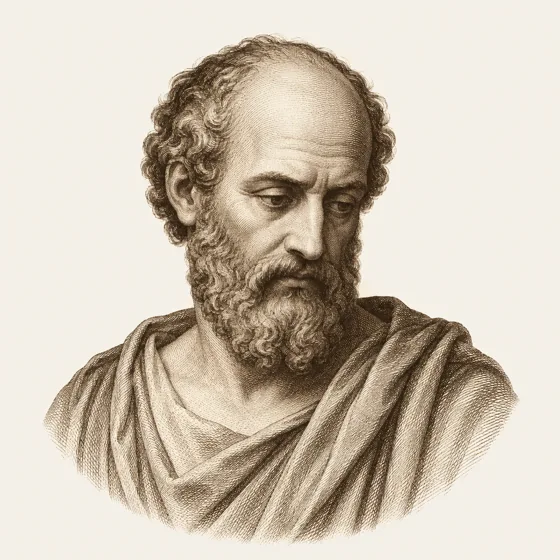 EuclidBuilding a proofGeometry & proofEuclidactive c. 300 BCEAlexandria · EgyptTwo compass circles make equal sides.Euclid organized geometry and number theory into a chain of definitions, assumptions, and proofs in the Elements.Explore the ideas ↗
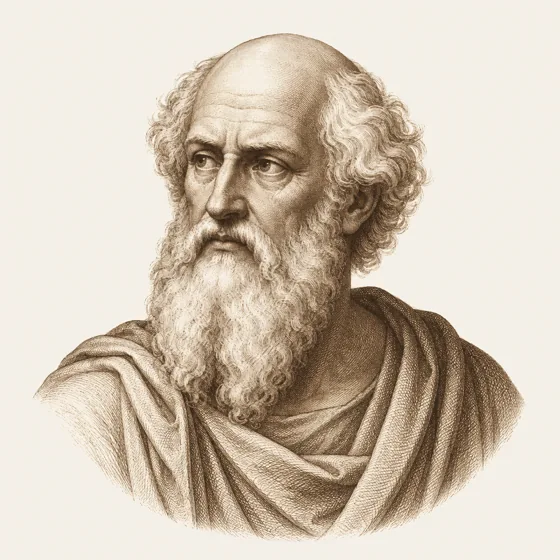 ArchimedesGetting closer to πCircles, area & mechanicsArchimedesc. 287–212 BCESyracuse · SicilyPolygons close in on the circle.Archimedes bounded π with polygons and developed powerful methods for areas, volumes, and mechanical balance.Explore the ideas ↗
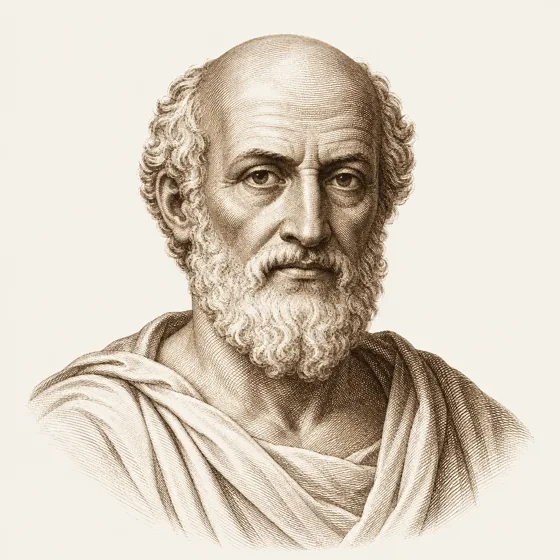 EratosthenesMeasuring the EarthEarth measurement & primesEratosthenesc. 276–194 BCECyrene · AlexandriaSunlight and shadows measure Earth.Eratosthenes used the difference between sunlight angles at two places to estimate Earth’s circumference.Explore the ideas ↗
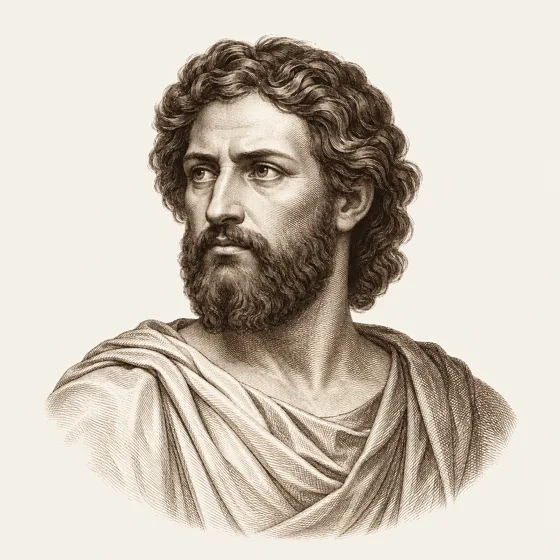 ApolloniusDrawing an ellipseConic sectionsApolloniusc. 262–190 BCEPerga · AlexandriaTwo pins + a loop of string → an ellipse.Apollonius developed the geometry of conic sections, including the curves we call ellipses, parabolas, and hyperbolas.Explore the ideas ↗
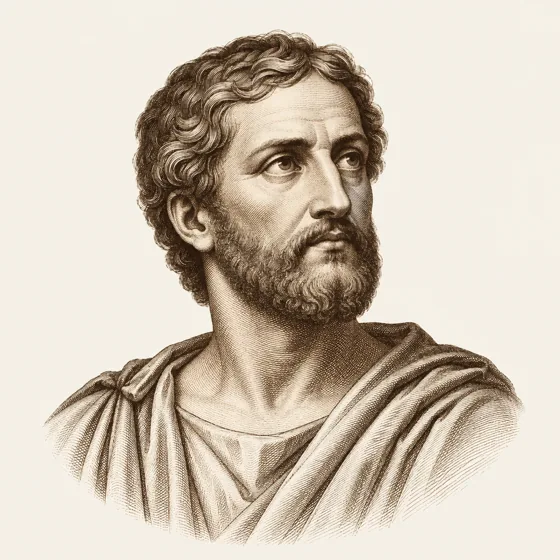 HipparchusTurning angles into lengthsAstronomy & trigonometryHipparchusc. 190–120 BCENicaea · RhodesAn angle tells you the chord length.Hipparchus connected astronomy with a table of circle chords, an early tool for turning angles into lengths.Explore the ideas ↗
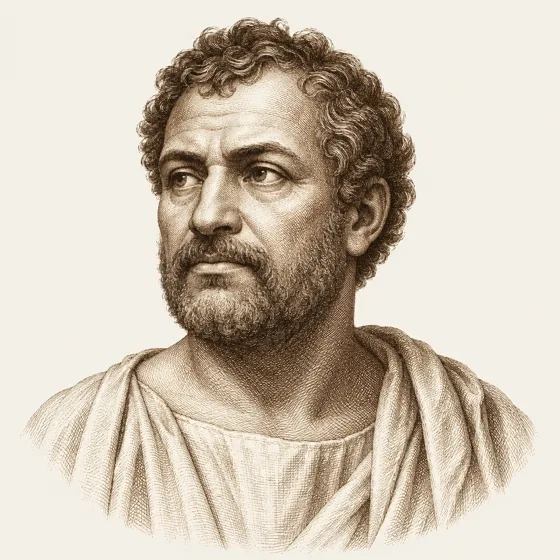 HeronMeasuring a fieldArea measurement & mechanicsHeronactive c. 60 CEAlexandria · EgyptThree side lengths determine the area.Heron’s Metrica describes practical measurement, including a triangle’s area calculated from its three side lengths.Explore the ideas ↗
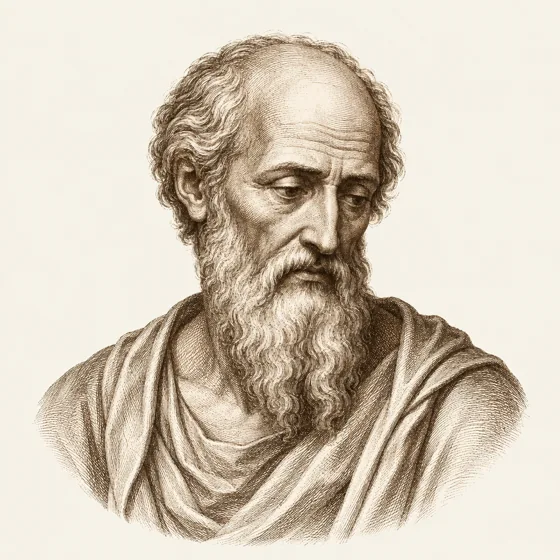 DiophantusFinding the unknownEquations & number problemsDiophantusactive c. 250 CEAlexandria · EgyptUse the difference to find both amounts.Diophantus’s Arithmetica used unknown quantities and equations to solve numerical problems, often seeking positive rational answers.Explore the ideas ↗
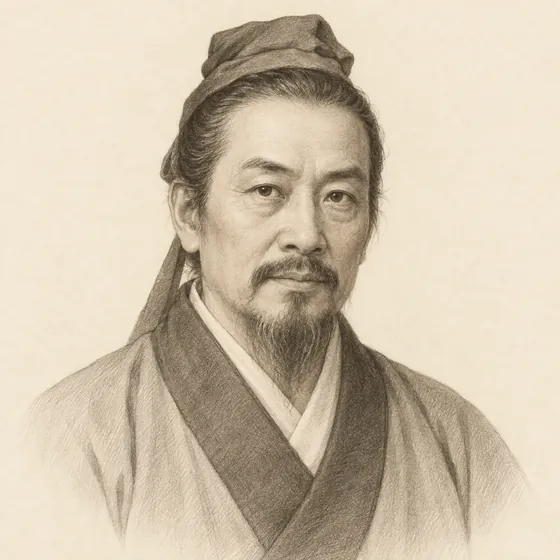 Liu HuiEliminating an unknownAlgorithms & geometryLiu Huiactive 263 CEChinaMatch the sacks. Cancel an unknown.Liu Hui explained and refined procedures in the Nine Chapters, including solving several unknowns by elimination.Explore the ideas ↗
 PappusThree crossings, one lineGeometry & collectionsPappusactive c. 320 CEAlexandria · EgyptThree string crossings share one line.Pappus preserved Greek geometry and described a configuration whose three constructed crossings always lie on one line.Explore the ideas ↗
 HypatiaMeasuring a star’s altitudeTeaching & astronomyHypatiac. 355–415 CEAlexandria · EgyptSight a star. Read its angle above the horizon.Hypatia taught mathematics and astronomy, worked with earlier mathematical texts, and advised on astronomical instruments.Explore the ideas ↗
 Zu ChongzhiA remarkably close fractionNumerical accuracyZu Chongzhi429–501 CEJiankang · present-day Nanjing, China113 wheel turns ≈ 355 diameters.Zu Chongzhi obtained tight bounds for π and the remarkably accurate fraction 355/113.Explore the ideas ↗
 AryabhataSine is a heightSines & astronomyAryabhata476–c. 550 CEKusumapura · IndiaSine: bucket height ÷ wheel radius.Aryabhata’s mathematical astronomy used a table of sines to connect angles with lengths.Explore the ideas ↗
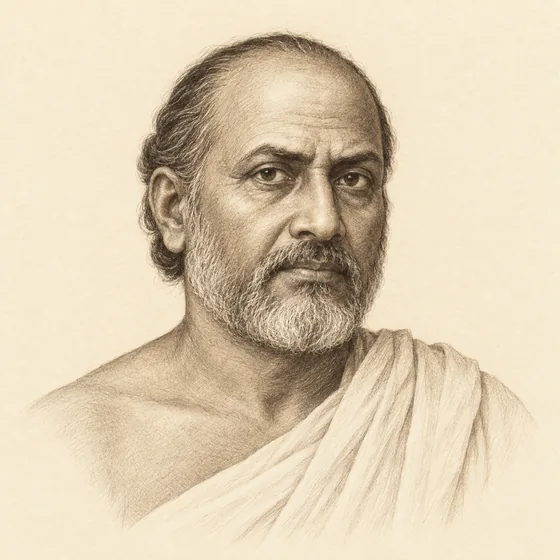 BrahmaguptaDebts, fortunes and zeroZero & signed numbersBrahmagupta598–c. 670 CEBhillamala · IndiaA coin and a debt cancel to zero.Brahmagupta set out rules for calculating with zero, positive quantities and negative quantities.Explore the ideas ↗
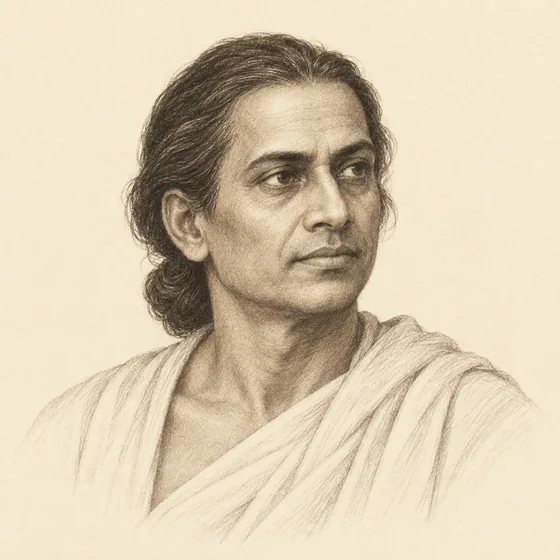 Bhaskara IWhy a digit’s place mattersArithmetic & astronomyBhaskara Ic. 600–680 CEIndia · associated with AsmakaA small circle keeps the empty place in 2○5.Bhaskara I explained Aryabhata’s mathematics, writing numbers both in words and in decimal figures with a small circle for zero.Explore the ideas ↗
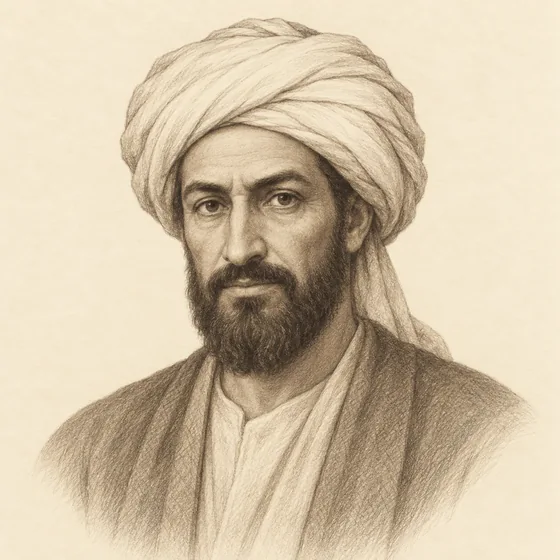 Al-KhwarizmiComplete the squareAlgebra & algorithmsAl-Khwarizmic. 780–850 CEBaghdad · present-day IraqFour strips and four corners complete the square.Al-Khwarizmi organized methods for solving equations and explained them with geometric arguments.Explore the ideas ↗
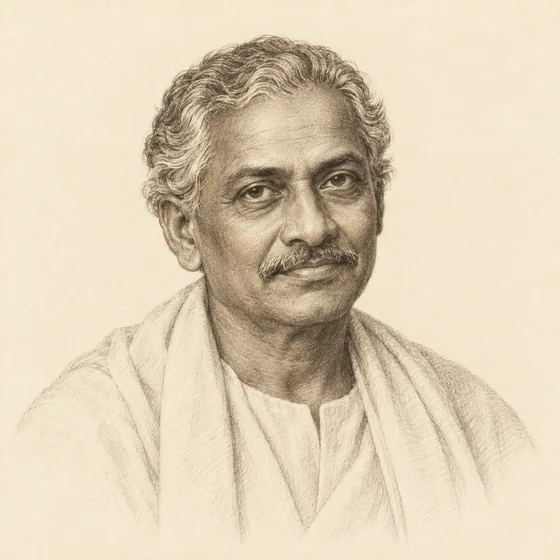 MahaviraCount each choice onceCounting & combinationsMahavirac. 800–870 CESouthern IndiaHis two rows count the blends of six tastes.Mahavira gave rules for permutations and combinations in his compendium of mathematics.Explore the ideas ↗
 ThabitNumbers that give backNumber theory & geometryThabitc. 836–901 CEHarran & BaghdadEach divisor sum gives the other number.Thabit ibn Qurra proved a rule for producing certain pairs of amicable numbers.Explore the ideas ↗
 Abu KamilAdd square-root lengthsAlgebra & irrational numbersAbu Kamilc. 850–930 CEEgyptDifferent roots share a common length.Abu Kamil extended algebra to calculations involving irrational quantities and higher powers.Explore the ideas ↗
 Al-BattaniA table of shadowsTrigonometry & astronomyAl-Battanic. 850–929 CEHarran & RaqqaOne stick’s shadow for every height of the sun.Al-Battani developed trigonometric methods that connected observed angles with calculable lengths.Explore the ideas ↗
 Abu’l-WafaThree tiles, one squareGeometry for craftspeopleAbu’l-Wafa940–998 CEBuzjan & BaghdadThree equal tiles cut into one square.Abu’l-Wafa wrote geometry for craftspeople, including a way to cut three equal squares into pieces that make one square.Explore the ideas ↗
 Al-KarajiCubes that make a squarePowers & algebraic patternsAl-Karajic. 953–1029 CEBaghdad & PersiaSuccessive cubes fill a square of blocks.Al-Karaji developed arithmetic with algebraic powers and arguments for sums, including the sum of consecutive cubes.Explore the ideas ↗
 Ibn al-HaythamFind the reflection pointOptics & geometryIbn al-Haytham965–c. 1040 CEBasra & CairoFind the bounce that sends light to the eye.Ibn al-Haytham studied how geometry determines the path of light reflected from a curved mirror to an observer.Explore the ideas ↗
 Al-BiruniSize the Earth from a hillSurveying & geographyAl-Biruni973–1048 CEKhwarazm, Ghazna & IndiaOne angle from a hilltop sizes the Earth.Al-Biruni measured a hill’s height, then the dip of the horizon from its top, and calculated the radius of the Earth.Explore the ideas ↗
 Jia XianBuild the number triangleRoots & number patternsJia Xianc. 1010–1070 CESong ChinaAdd the neighbours. Build the next row.Jia Xian used a triangle of numbers to extract square, cube and higher roots.Explore the ideas ↗
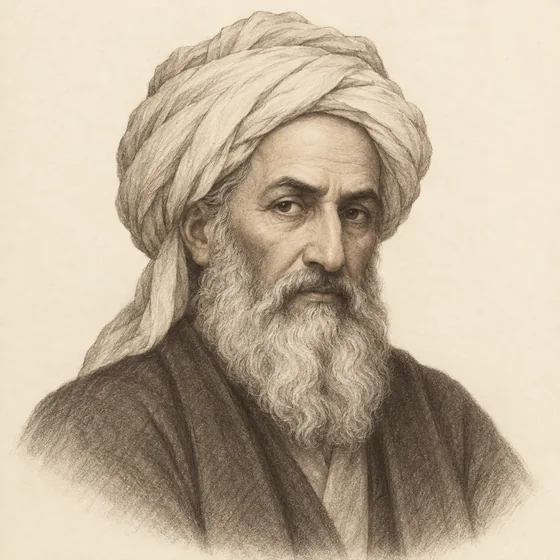 Omar KhayyamSolve where two curves meetCubics & geometryOmar Khayyam1048–1131 CENishapur, Samarkand & IsfahanThe curves meet at the solution.Omar Khayyam classified cubic equations and solved types of them by intersecting conic curves.Explore the ideas ↗
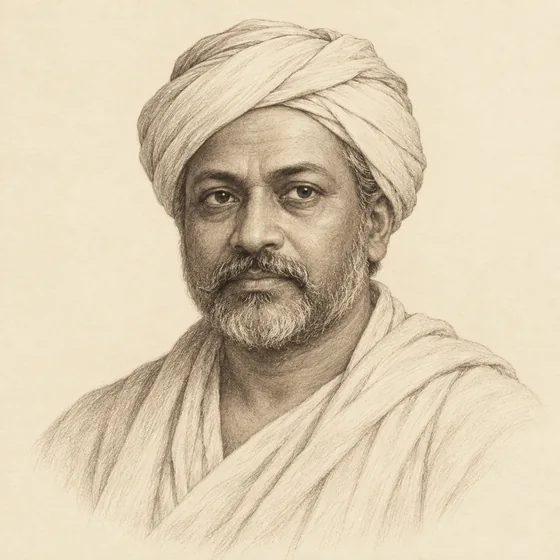 Bhaskara IISquare plus oneWhole-number equationsBhaskara II1114–1185 CEVijayapura & UjjainSeven small squares + one tile = 8².Bhaskara II developed the cyclic method for whole-number solutions of equations such as x² − Ny² = 1.Explore the ideas ↗
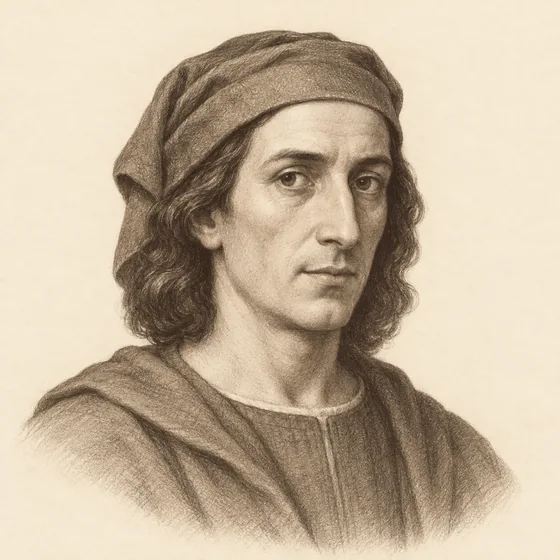 FibonacciWatch a population growArithmetic & sequencesFibonaccic. 1170–1250 CEPisa & the MediterraneanExisting pairs + newborn pairs = next total.Fibonacci promoted Hindu-Arabic arithmetic in Latin Europe and posed a rabbit problem that produces his namesake sequence.Explore the ideas ↗
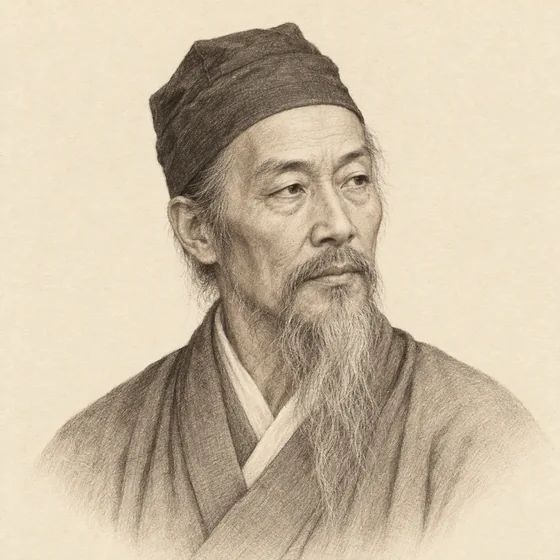 Li YeSee past a round townGeometry into algebraLi Ye1192–1279 CENorthern ChinaA grazing sightline reveals the town’s width.Li Ye used geometric problems to construct polynomial equations with a single unknown.Explore the ideas ↗
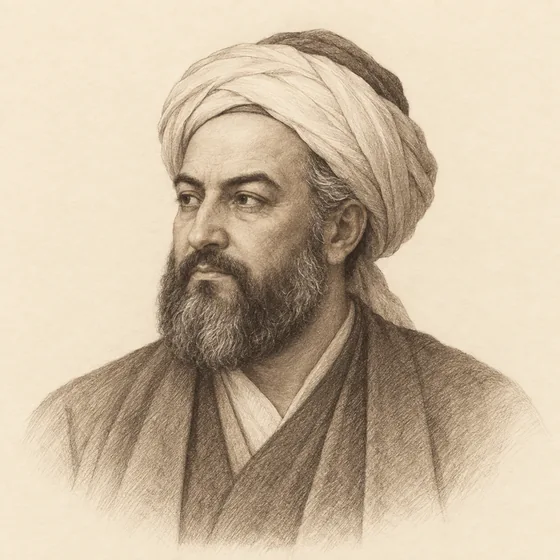 Al-TusiCircles make a lineGeometry of motionAl-Tusi1201–1274 CETus & MaraghehTwo circular motions trace one straight line.Al-Tusi showed how two circular motions can combine to move a point along a straight line.Explore the ideas ↗
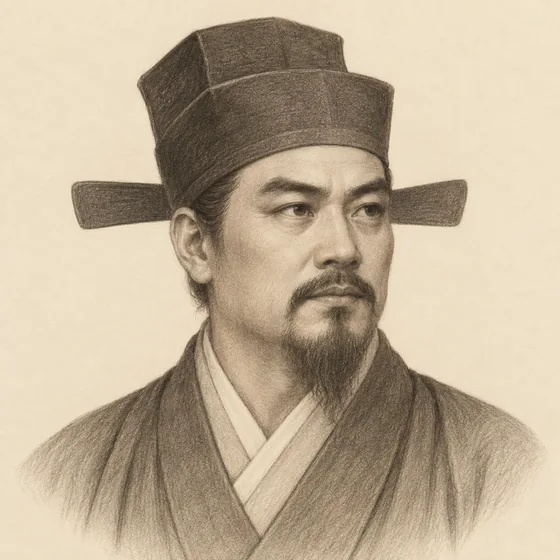 Qin JiushaoMatch the remaindersRemainders & equationsQin Jiushao1202–1261 CESouthern Song China23 coins leave 2, 3 and 2 in stacks of 3, 5 and 7.Qin Jiushao developed a general method for simultaneous remainder problems, including divisors with common factors.Explore the ideas ↗
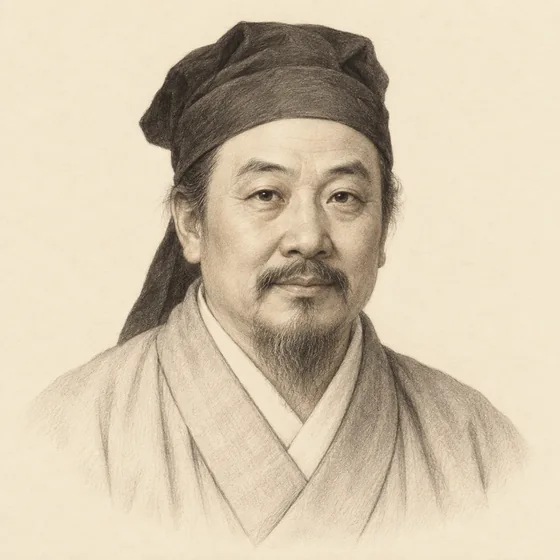 Yang HuiSeven equal sumsNumber diagramsYang Huic. 1238–1298 CEHangzhou, ChinaCentre + four compass points = 65.Yang Hui recorded number diagrams in which different arrangements of entries share the same total.Explore the ideas ↗
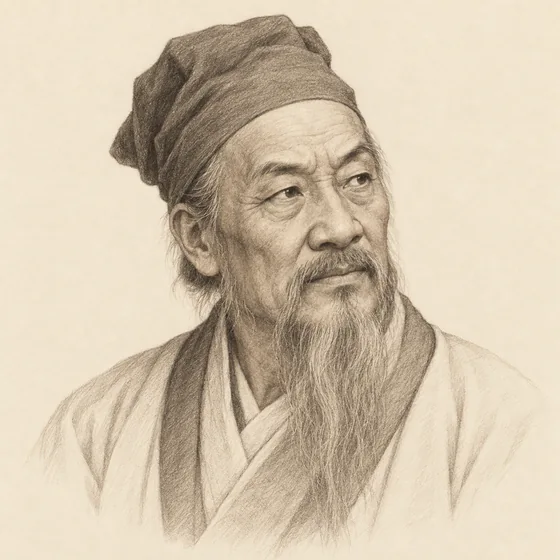 Zhu ShijiePredict the next pileFinite differencesZhu Shijiec. 1260–1320 CEYuan ChinaSubtract again: a steady change appears.Zhu Shijie studied polynomial equations, sums of figurate numbers and methods using successive differences.Explore the ideas ↗
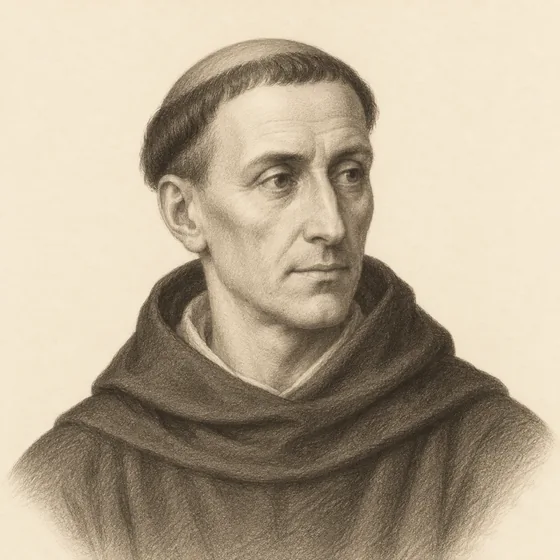 BradwardineA star’s pointsGeometry & proportionsBradwardinec. 1295–1349 CEOxford, EnglandHowever lopsided, a star’s five points make two right angles.Bradwardine studied star polygons and showed how much the angles at their points add up to. He also wrote on ratios of speeds.Explore the ideas ↗
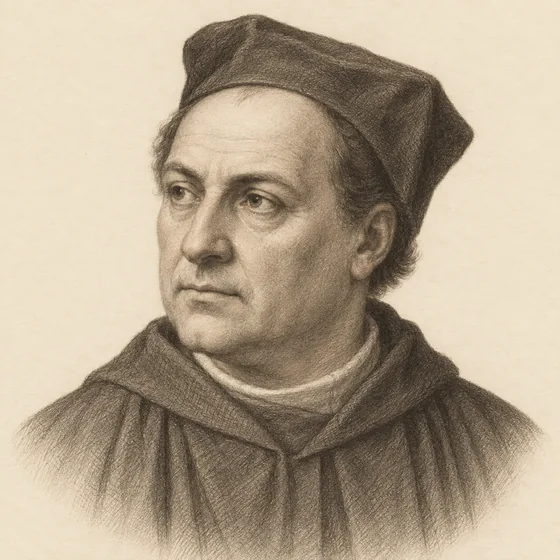 Nicole OresmeSee distance in a graphGraphs & motionNicole Oresmec. 1320–1382 CEParis & Lisieux, FranceTurn the triangle’s corner: it becomes the rectangle of the middle speed.Oresme drew changing qualities as figures, an early kind of graph, and proved geometrically that a steadily changing speed covers the same distance as its middle speed.Explore the ideas ↗
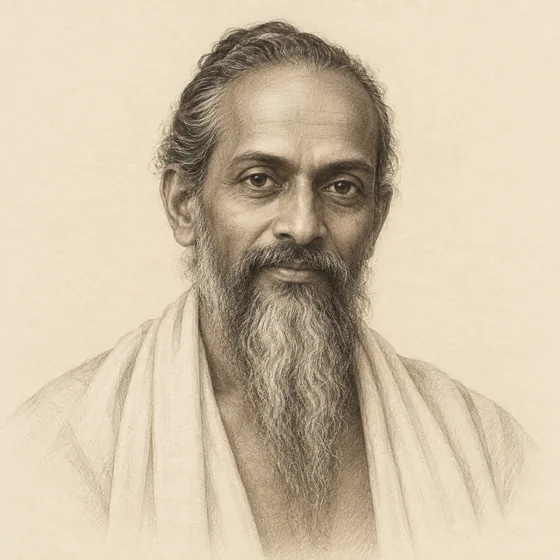 MadhavaAdd, subtract, approachInfinite seriesMadhavac. 1350–1425 CESangamagrama, Kerala, India4 − 4/3 + 4/5 − … swings in on the rim of a well.Madhava found infinite series for π and for trigonometric quantities, with correction terms that make a short sum very accurate.Explore the ideas ↗
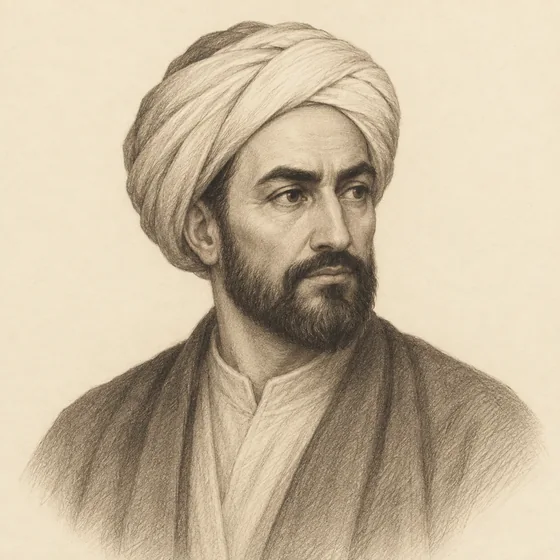 Al-KashiZoom in by tenthsDecimal arithmeticAl-Kashic. 1380–1429 CEKashan & SamarkandEach zoom splits one piece into ten: 6.2831…Al-Kashi worked out 2π to sixteen decimal places and set out decimal fractions methodically, so that fractions could be calculated like whole numbers.Explore the ideas ↗
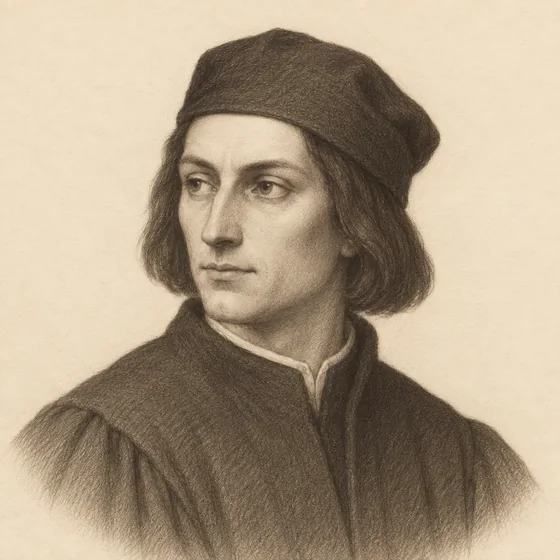 RegiomontanusMeasure across a riverSolving trianglesRegiomontanus1436–1476 CEVienna, Buda & NurembergTwo sightlines and a baseline reach across a river.Regiomontanus’s On Triangles set out how to solve plane and spherical triangles, including the sine rule.Explore the ideas ↗
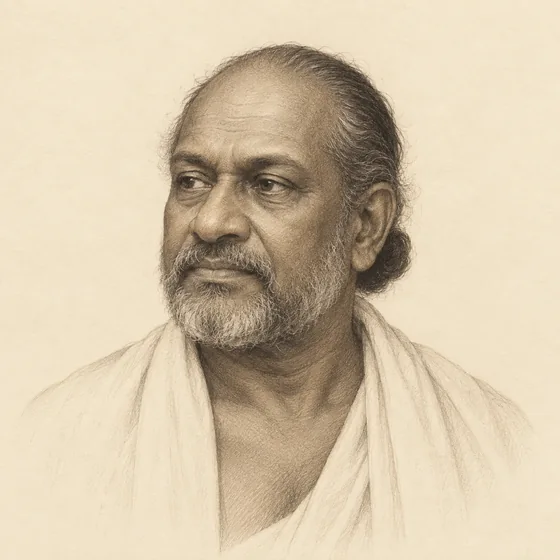 NilakanthaHow much of the Moon is litMathematical astronomyNilakantha1444–after 1501 CEKerala, IndiaThe bright part is the versed sine of the Sun–Moon angle.Nilakantha’s astronomy computed planetary positions, eclipses and the size of the Moon’s sunlit part.Explore the ideas ↗
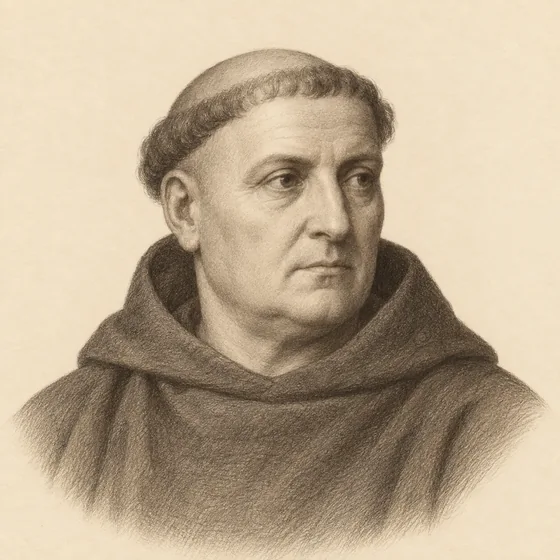 Luca PacioliThe divine proportionProportion & arithmeticLuca Paciolic. 1445–1517 CERenaissance ItalyCut so whole : longer = longer : shorter.Pacioli’s Divine Proportion (1509) studied the “proportion having a mean and two extremes”, with Leonardo da Vinci’s drawings of solids.Explore the ideas ↗
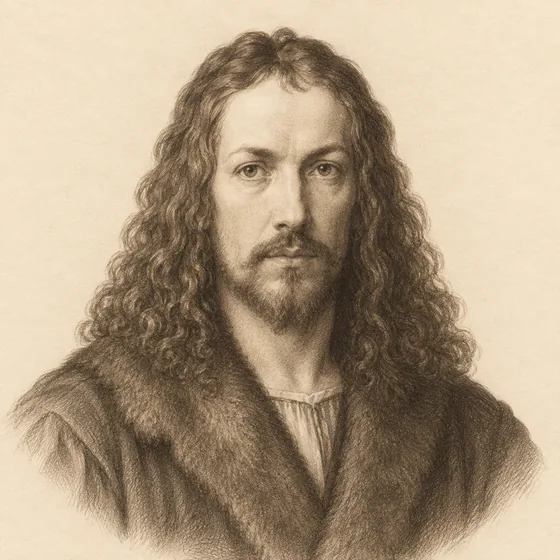 Albrecht DürerDraw what the eye seesGeometry & perspectiveAlbrecht Dürer1471–1528 CENuremberg, GermanyA string from the eye marks each corner on the glass.Dürer taught artists geometry, including machines that put a picture into true perspective point by point.Explore the ideas ↗
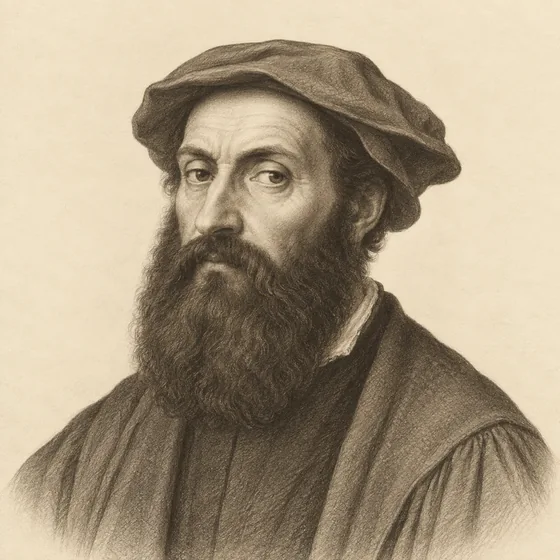 TartagliaTake a cube apartCubic equationsTartagliac. 1500–1557 CEBrescia & VeniceCut a corner: a cube and three slabs make x³ + 3uv·x.Tartaglia found how to solve cubic equations such as “a cube and things equal to a number”, and gave his rule to Cardano as a verse.Explore the ideas ↗
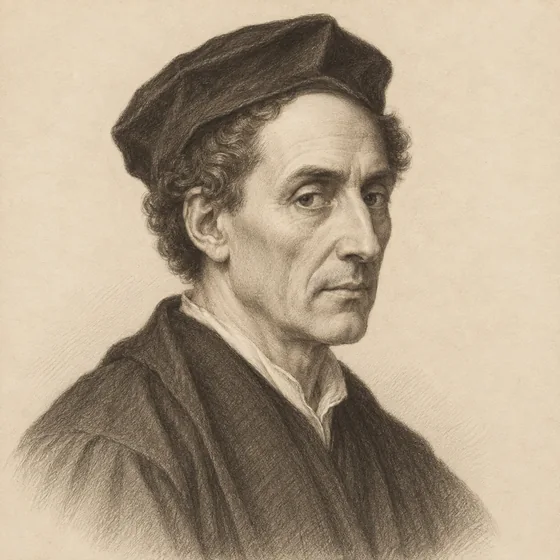 CardanoCount the whole circuitAlgebra & probabilityCardano1501–1576 CEMilan & BolognaAt least one ace: 11 of 36 throws, not 12.Cardano counted the ways dice can fall, and showed how fair wagers follow from the count, in his Book on Games of Chance.Explore the ideas ↗
THE TIMELINE CONTINUES
PresentFrom the ancient world to today
Later chapters will be added here.ABOUT THIS TIMELINE
A starting point,
not the whole story.
Mathematics grew across many cultures, often through people whose names we do not know. These are forty-five selected early figures with ideas we can explore visually.
Dates are approximate. Each page separates historical evidence from later tradition and links to sources. Portraits are imagined illustrations.